About
Homunculus Cabinet
An independent press for first translations of early modern scientific books — the ones everybody cites and nobody has read.
A cabinet, in the seventeenth century, was a room where a person kept the things they had collected and the instruments they had built: lenses, specimens, drawings, the odd preserved animal. The homunculus is the little figure Nicolaas Hartsoeker drew inside a sperm cell in 1694 — an image reproduced in a thousand textbooks, usually with the caption wrong, almost always without the sentence he wrote underneath it.
The press exists because that is the normal condition of these books. The plates travel; the argument stays in a scan in a language most readers cannot follow. Each title here is translated in full and set against the original printing, with the page cited wherever the reading is doubtful and a note wherever the original is simply wrong.
Its first translation was made by Claude, an AI model made by Anthropic, under the direction of the editor, Dominic Ouryan Grayson. The book says so on its title page, and prints a full account of how the work was done and checked.
The mark
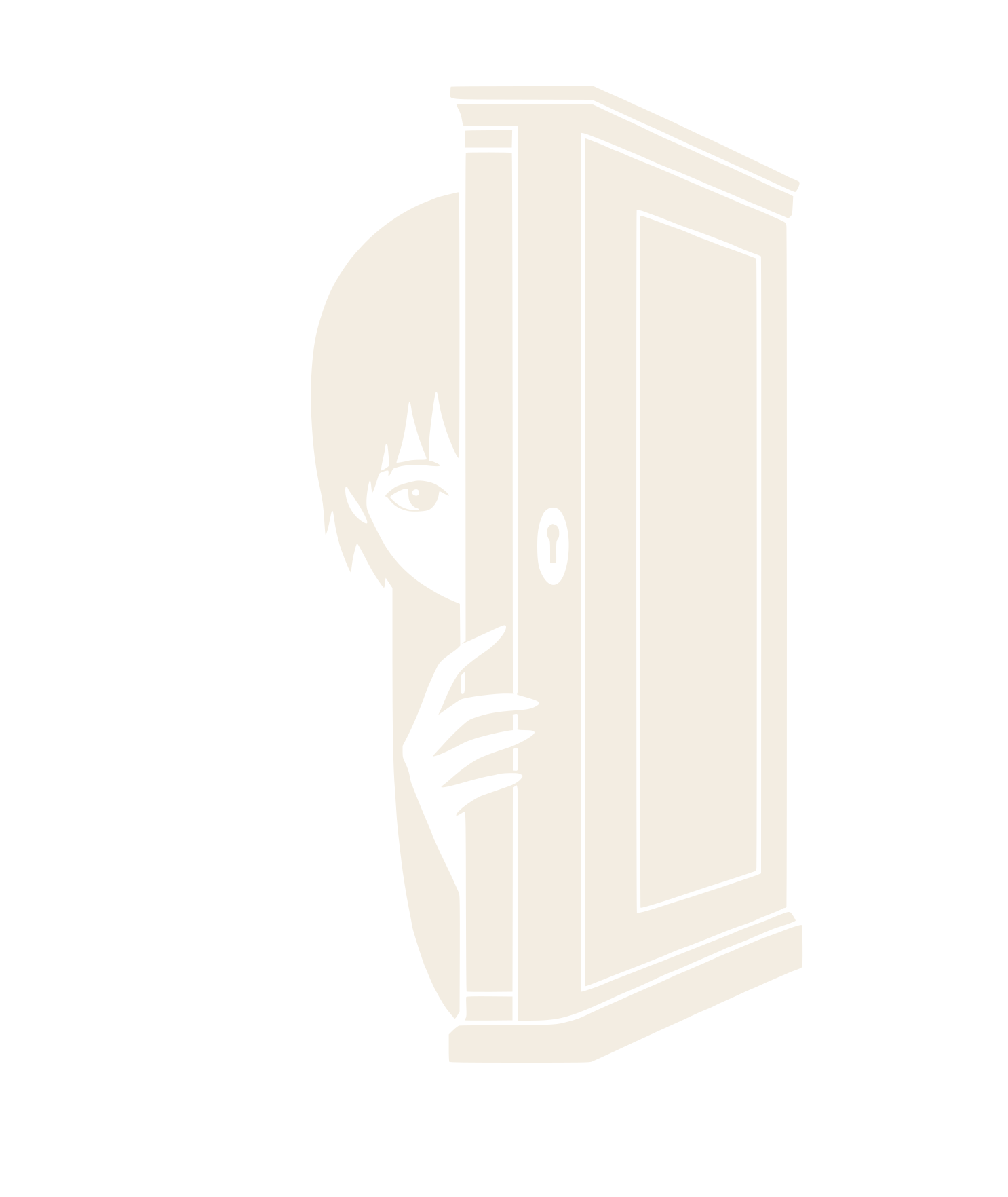
A cabinet, standing open. Someone is behind the door, half a face showing, one hand hooked around the edge — not coming out, not going back in, just looking at whoever opened it.
It is the right picture for the work. These books have been shut for three hundred years. Opening one does not make it yours, but it makes you the one being looked at.
Contact
| General | dominicouryang@proton.me |
|---|---|
| Review copies | Ask, and say where the review will appear. |
| Rights & permissions | No copyright is claimed in the translation of the Essay on Dioptrics, and the 1694 original is in the public domain. Its engravings are reproduced from the copy held by the Bibliothèque interuniversitaire de santé, Paris (Medic@), under the Licence Ouverte, which asks for that credit. |
Homunculus Cabinet is a registered publisher imprint in the United States. Its ISBNs are its own.